 April 7, 2026
  Admin
Admin 
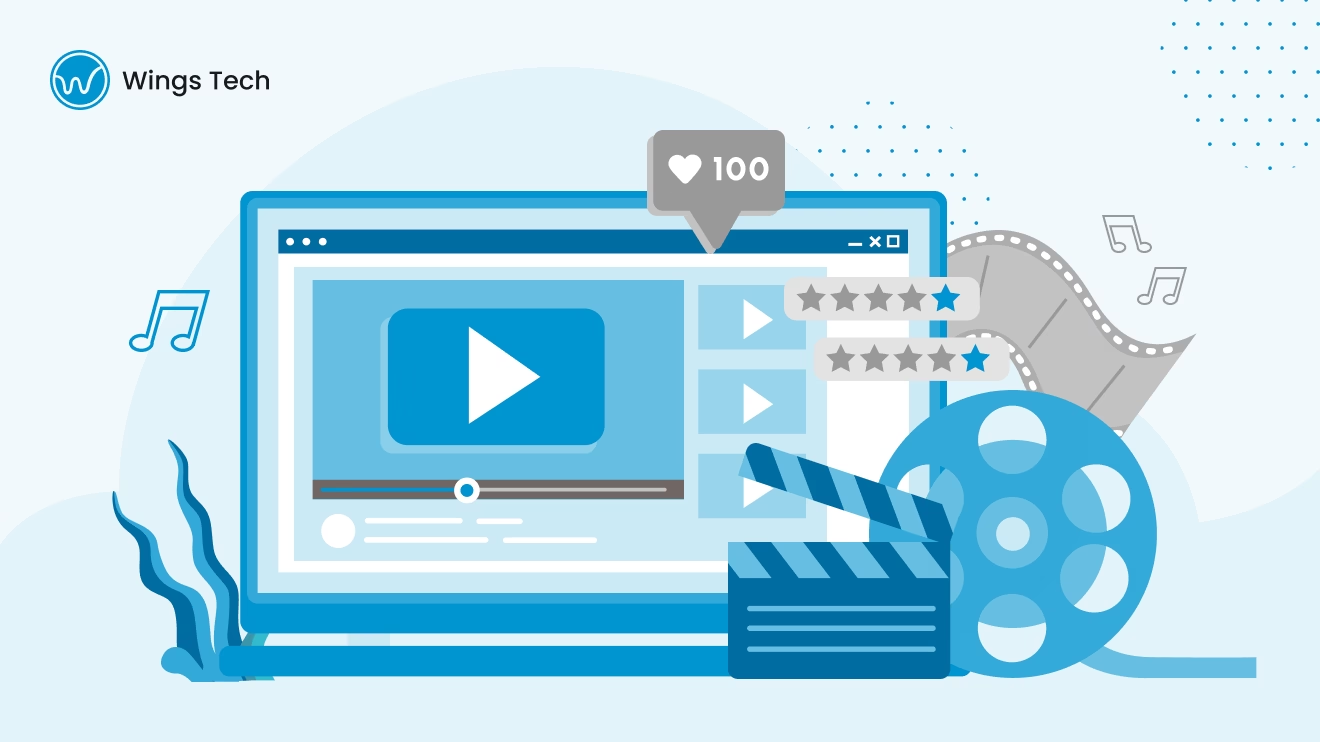
Table of Contents
Every industry must adapt to the new norms today, and the media & entertainment industry is no different. Audiences today do not sit in front of a television waiting for their favourite show. Nor do they flip through a physical magazine to catch the latest celebrity news. And that’s where Media & Entertainment website development comes in.
Today’s entertainment consumers are likely going to do these things from home via online platforms like Netflix, Spotify, TikTok, or other streaming services, which makes having a good online presence for your media company/brand imperative to generate an audience for your media content. The media and entertainment industry is already among the top-growing industries today, and thus it is projected that the digital media market will reach over $560 billion in revenue globally by 2030. Because of this projection, it is crucial that your brand is well represented and dominant on the internet and in all forms of media communication available to consumers.
Whether you are an independent content creator, a music label, a film production house, or a full-scale entertainment network, understanding the ins and outs of media & entertainment website development is important. In this guide, we deep dive into why a top-tier media website is important and what the actionable ways to achieve this goal are.
What is Media & Entertainment Website Development?
Developing a Media & Entertainment website is a very detailed process focused on creating an online platform that allows people to stream, showcase, and sell entertainment content. Creating a Media website includes a lot of multimedia and the audience experience is so important that it must be totally connected to create an impressive place for your content.
Most of the time, websites ecommerce focus on providing a service to a general audience by offering products or services to the public. Media & Entertainment websites cannot have static pages showing show thumbnails; they require special features such as high-quality video playback/streaming, real time content feeds, a great user experience, and an engaging process for subscription/ticketing that creates an urge to engage with the site. Developing a Media & Entertainment website is creating a platform that gives visitors an immersive experience into your content.
Why Do You Need a Media & Entertainment Website?
Here are a few compelling reasons why media & entertainment website development is important for your brand:
Growing Your Audience Beyond Physical Boundaries
While a physical location like a movie theatre, or broadcasting from your facility has clear benefits, it also has many limitations due to geographic, time zone, and operational obstacles that reduce a traditional company’s ability to connect with consumers globally. An Internet-based media and entertainment site allows you to connect with an international audience without many of these traditional obstacles. For example, you have a facility in Mumbai and want to build an audience in Europe. Now, with a quality web-based media site, you can do this very easily.
Brand Credibility and Authority
Brand credibility is very important. A key factor in convincing today’s consumers to engage with a media business is having an established presence on the Internet. When you have a well developed website, you establish your credibility and authority through the demonstration of your available content library, press articles about your business, and consumer testimonials. A well developed media website enables consumers to fully engage with your content and demonstrate to them that your brand is legitimate, and worth their time.
Visual and Experiential Advantage for Showcasing Content
A media & entertainment site is much more than just a way to sell a product; rather, it is an experience in itself. By providing visitors with access to trailers, audio excerpts, photographs, episode summaries and other elements of the media brand, the consumer can view the media, visit the brand’s website and compare to his/her own experience with that same content.
24/7 Audience Engagement and Revenue
Although broadcast programming airs during a limited time period, a media & entertainment website is definitely a 24/7 entertainment hub. While your media team sleeps, your website continues to deliver content, process ticket sales, sell merchandise and collect new leads. You can also create an engaging experience for your audience through live chat, newsletters and community forums via a well-developed entertainment website.
The global online media & entertainment marketplace is projected to grow at a compound annual growth rate (CAGR) of 13.5% from 2024 through 2030. By developing a media website, you can not only reach out to the globe but also take advantage of dramatic growth from this sector.
What is the Process of Media & Entertainment Website Development?
Developing a media & entertainment website is no small task. Here is a realistic breakdown of the development process:
Step 1: Defining Your Niche and Audience Model
Before developing your website, you need to figure out exactly what it is that you’re going to do with your media company. Are you a music-streaming service, a film-distribution site, a news outlet that’s digital, or do you host live events? Each one has its own way of creating an appropriate tone for your website, what kinds of features should be included on it, and how they will make money through it.
Step 2: Research and Planning
Before you can begin building a website, you will want to research your target audience, competitors in the same space, and where you would fit within the larger landscape of media. As you study other successful media sites, you will need to determine what differentiates you from them, as well as what their strengths and weaknesses are. Once you have gathered all of this information, you can develop a roadmap for the visual and functional aspects of your site.
Step 3: Choose the Right Platform and Hosting
The next step is to select an appropriate platform to use for your media website. Recommended options include WordPress, Shopify, and Magento, which all have unique features and capabilities that will allow you to create content-driven sites and enable sales on your site. The platform you choose will impact how well your site performs, whether or not it is scalable and usable.
Step 4: Website Layout and Branding
The layout of your site should reflect the dynamic nature of your media brand in terms of its energy, creativity, and personality. It can be as fun or serious as you want! It should also be very easy for users to navigate to find the information they want to see (e.g.,videos or pictures).
Step 5: Identify Core Website Features
The media and entertainment need for their website is not just about having an aesthetically pleasing site. It includes items like a good content management system, media players (audio/video), ticketing for events, subscription/registration options, Search/Filter functionality.
Step 6: Implement eCommerce Functionality
A media website that is designed specifically for eCommerce should allow its users to easily buy content, sell products and manage subscriptions. It is essential that the site offers an integrated shopping cart system, safe and secure payment method(s), and the ability for customers to automatically receive digital items once they purchase them. The site must also offer users accounts, wish lists, and tracking of previously purchased items to provide increased service and value.
Step 7: Content and Copywriting
Your site’s content represents the identity of your company and should include meaningful data. Whether describing movies, music, articles or events, each description must be effective in delivering information to capture the attention of prospective customers. In addition to using descriptive content, there is room to include revealing videos, write-ups of artists and other relevant industry information that will keep your audience engaged with your site.
Step 8: Implement Customer Service Features
Your media & entertainment website must offer a range of support options to keep the experience smooth. These include live chat, email support, an FAQs page, and a knowledge base. Providing personalised support through chatbots or virtual assistants can set your platform apart from competitors.
Step 9: Test and Launch
Before launching your site, it is necessary to test it thoroughly. All media players, payment flows, and booking systems should work flawlessly, while the website should be fully responsive across all devices and screen sizes.
Step 10: Post-Launch Support and Updates
Website development doesn’t stop after launch. Regular content updates, security patches, and feature additions are needed to keep the platform fresh and audiences engaged.
Adding an eCommerce Shop to Your Media & Entertainment Website
Without eCommerce functionality in your media website, you are leaving significant revenue on the table:
eCommerce transforms your site from a digital brochure into a full-fledged revenue engine. It enables you to:
- Reach a global audience: Your content and merchandise are no longer restricted to local fans. With the right platform, your online store can become a global sales channel, reaching both direct consumers and B2B clients worldwide.
- Facilitate 24/7 sales: Your shop is open around the clock, letting fans buy tickets, merchandise, and subscriptions at any hour.
- Optimise order and inventory management: eCommerce platforms assist with stock management, digital licence tracking, and automated purchase notifications.
Choosing the Right Platform
Popular eCommerce platforms for media & entertainment websites include:
- WooCommerce (WordPress): Suitable for media brands already on WordPress and looking for customisable, cost-effective WooCommerce Development services. Ideal for blogs, news portals, and independent artists.
- Shopify: Ideal for media companies seeking a complete package with easy setup and powerful scalability through expert Shopify Development services. Perfect for merchandise stores, event ticketing, and digital downloads.
- Magento: Perfect for large media enterprises with sophisticated multi-channel requirements, offering robust features through advanced Magento Development. Best for streaming networks, large music labels, and media conglomerates.
Fundamental eCommerce Features
Your media & entertainment website needs the following features:
- Content catalogue by category (movies, music, events, podcasts, etc.)
- HD video previews, audio samples, and interactive galleries
- Secure payment gateways (Stripe, PayPal, Razorpay)
- Easy checkout and cart for tickets, subscriptions, and merchandise
- Customer accounts, watchlists, and purchase history
- Mobile and SEO optimisation
Technologies for Media & Entertainment Website Development
Media & entertainment websites require robust front-end and back-end development to effectively serve a global audience:
Front-End
Technologies such as HTML5, CSS3, JavaScript, React, and Vue.js help create an exciting, interactive experience with smooth animations, real-time content feeds, and engaging media players.
Back-End / Website Development
Server-side technologies handle the logic behind your platform, ensuring everything runs smoothly under the hood. The most widely used back-end technologies for media websites include:
- PHP: A powerhouse for dynamic content management and high-traffic media platforms, PHP remains the backbone of many leading entertainment sites.
- Laravel: One of the most elegant PHP frameworks available, Laravel enables rapid media platform development with clean architecture, robust API integrations, and built-in authentication ideal for subscription-based entertainment platforms.
- CodeIgniter: A lightweight yet powerful PHP framework, CodeIgniter is favoured for building fast-loading, resource-efficient media portals and news websites where performance is paramount.
- Zend (Laminas): Zend is a robust, enterprise-grade PHP framework suited for large media corporations requiring highly scalable, secure, and customisable web applications.
- Symfony: Symfony is a mature, modular PHP framework widely used in complex media applications. Its reusable components make it a top choice for building feature-rich entertainment platforms with long-term maintainability.
Web App Development
Beyond traditional websites, modern media brands require Web App solutions for a native-like experience on browsers. Progressive Web Apps (PWAs) built using React, Vue.js, or Angular allow your audiences to stream content, receive push notifications, and engage with your platform offline, blurring the line between a website and a mobile app.
CMS & eCommerce
Tools like WordPress with WooCommerce, Shopify, and Magento offer pre-designed templates tailored for media and eCommerce use cases. Custom solutions can also be developed according to specific business and content needs.
Integrations
For a forward-looking media & entertainment website, embed technologies such as AR/VR for virtual concert experiences, AI for personalized content recommendations, CDN (Content Delivery Networks) for seamless global streaming, and CRM tools for enhanced fan relationships.
Key Features of a Successful Media & Entertainment Website
A media site has to be eye-catching and combine creative design with high-performing functionality, so let’s look at the main characteristics:
1. Visual Alignment with Your Brand
Your website should provide an instant ‘first impression’ of your media brand’s identity (i.e., if you are a heavy metal record label your site will have a heavy metal record label visual design). It should align with your content brand values accordingly in order to set the right tone for every visitor’s experience.
2. Advanced Content Search and Filtering
There are different reasons every person is visiting your site, therefore, each of these different visitors are there to view different content. You should make it possible for them to easily discover content through a robust filtering mechanism. You should be able to filter based on what they are looking for (i.e., whether by genre of music, artist, release date, or language), and provide search results almost instantly.
3. The Importance of High-Quality Media Players and Visuals
Media quality is critical to achieving a successful outcome in this industry. With media players capable of providing HD video streaming as well as the ability to stream music at a lossless level, provide very high definition cover illustrations, and use interactive promotional visuals gives your audience the opportunity to fully experience your content. Model showcases and artist lookbooks help increase engagement with your audience as well.
4. The Need for Secure and Diverse Payment Options
Imagine a fan adding (3) tickets to a concert and (2) items of merchandise to their shopping basket and clicking “Pay” only to learn your site has hung up on processing their payment. Audience patience today is at an all-time low; therefore, you will lose them before they ever complete that transaction! Your media site will want to provide multiple different forms of payment with quick and secure payment processing options including (among others) UPI, PayPal, Credit Card and Digital Wallets to ensure swift and easy transactions.
5. Audience Reviews and Testimonials
There are many dishonest platforms on the internet. To protect your company’s credibility; you should have your customers’ voices seen through loyal fans and critics of your product/service. The inclusion of positive commentary from actual consumers will encourage new customers to subscribe to your service / buy from you with confidence and quickly.
6. Wishlist and Content Comparison Tools
Your fans will enjoy creating a wish list of things they want to view in the future or comparing subscription levels. By using your web site to create a watchlist, playlist, and comparison tool for plans, consumers can help themselves make sound decisions and choose the right option based on their preferences.
7. Multi-Language and Multi-Currency Support
When it comes to entertainment, it is truly an international endeavour. Your content may be viewed by a Korean film-goer today and then a Brazilian music-lover tomorrow; thus, you need to provide an environment that is both localised and seamless for your international audience to feel comfortable on your site.
8. A Blog or Editorial Section for Industry Trends
Entertainment and Content Marketing go hand in hand. Items such as blogs, interviews, and editorials regarding industry issues, artist showcases, and cultural discussions give new audiences the opportunity to connect with you and also show that you are an authority regarding media. A properly managed editorial section builds loyalty among your audience, which in turn creates consistent organic traffic to your site.
Best Practices for Media & Entertainment Website Development
Media and entertainment websites should be exciting, responsive, and encourage repeat visits by your audiences considering the following suggestions for your company:
1. Mobile Responsiveness and Fast Loading
You’re losing most of your potential users if your media site does not function on mobile devices. People consume media in all kinds of places and ways, including during their daily commutes to work, taking short breaks from work, and at home in the late hours when there is nothing else to do. Ensure that your site fits every screen you may want to view it on easily, and that the content can start playing/streaming within seconds of being accessed.
2. Security
You must protect your Users’ payment information and personal information by implementing SSL certificates and ensuring that you are PCI compliant. If you are running a site with streaming media content, you also need to implement DRM (Digital Rights Management) to prevent your content from being pirated. While it is important to protect your media site technically, trust must also be established with your Users through your site’s security features.
3. SEO
Your website should rank for both global and niche-specific searches to attract the right audiences. Optimise your platform with the correct keywords, relevant backlinks, and engaging editorial content to ensure your media and entertainment content is discovered by the right people around the globe.
4. Content Updates
A stagnant media platform is a dead media platform. Without regular content additions and updates, your audience will feel neglected and migrate to competitors. Your website should always be refreshed with new releases, upcoming events, trending content, and fresh editorial pieces. A library frozen in the past is irrelevant to today’s fast-moving entertainment consumer.
How Much Does Media & Entertainment Website Development Cost?
Prices depend on complexity, functionality, and features. Simple content websites can begin at $2,500, and advanced streaming platforms or multi-channel entertainment portals with custom functionality can cost up to $75,000 or more.
Media & Entertainment Web Design Trends in 2025
-
- Dark-mode-first, cinematic design aesthetics.
- AI-powered personalised content recommendations.
- Immersive AR/VR virtual concert and event experiences.
- Short-form video integration and interactive storytelling.
- Sustainable and ethical digital branding.
How Wings Tech Can Help You Develop a Media & Entertainment Website
Wings Tech specialises in custom media & entertainment websites and digital platform development, offering services that include:
-
-
-
- Custom design that captures your brand’s creative energy.
- eCommerce integration for ticket sales, subscriptions, and merchandise.
- Back-end development using PHP, Laravel, CodeIgniter, Zend, and Symfony for a powerful, scalable platform.
- Web App development for a seamless, app-like experience on any browser.
- AR/VR features for immersive virtual experiences.
- Ongoing SEO and maintenance support.
-
-
Wrapping Up
Developing a media & entertainment website is not all about getting a site built, it’s about engineering an immersive digital experience that communicates your brand’s energy and resonates deeply with your audience. With effective use of best practices, modern technologies like Laravel, Symfony, CodeIgniter, and powerful eCommerce platforms like WooCommerce, Shopify, and Magento, you can take your media & entertainment business to new heights and capture audiences around the world.