November 1, 2026
 Admin

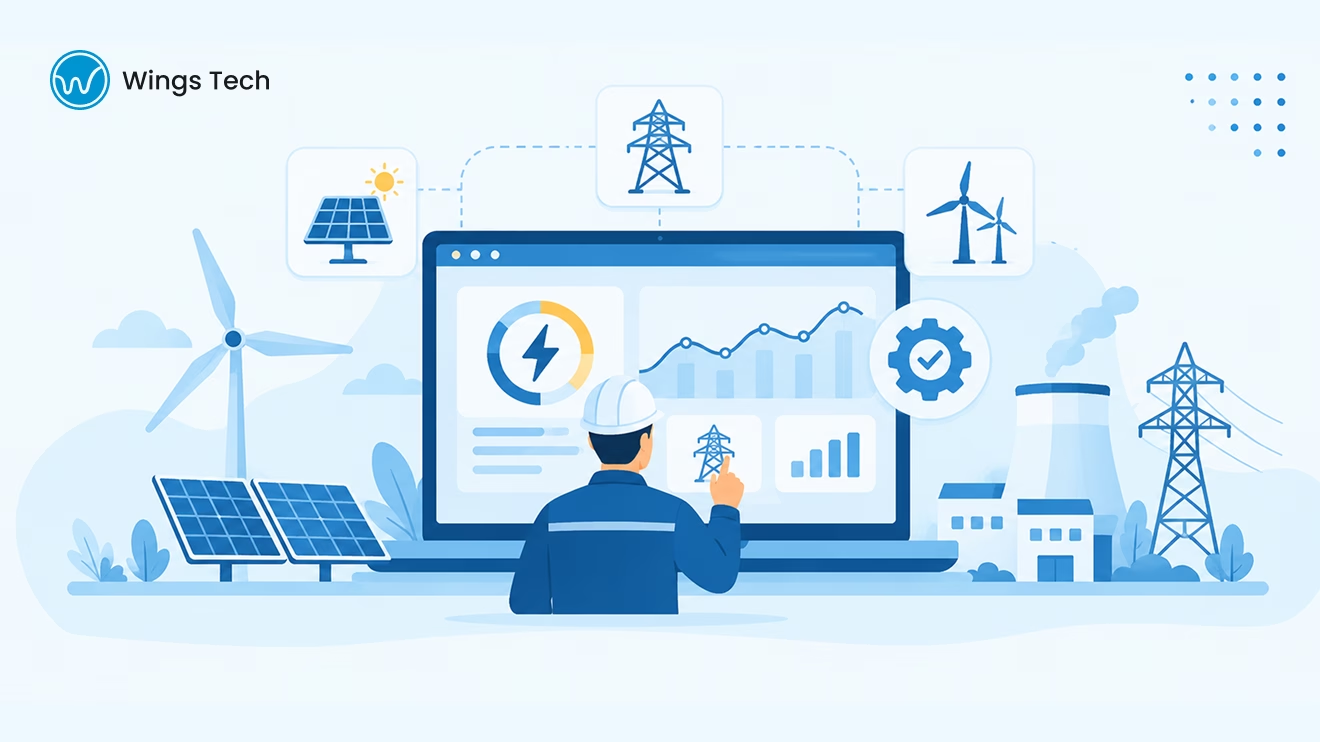
Table of Contents
A transformer identifies signs of wear weeks before it is supposed to malfunction and disrupt power in a certain area. A utility specialist monitors the inflow of solar and wind energy into the power grid instantaneously, with no need for balancing. A user receives a notification about a spike in electricity consumption immediately and is not surprised by the electricity bill at the end of the month. The transition from outdated SCADA systems and spreadsheets is the consequence of advanced software development in energy and utilities.
Utilities face a range of challenges: the need to modernize the grid, the growth of renewable energy integration requirements, increased complexity of regulations, and end-users who require real-time transparency similar to what they have with banking apps and ridesharing services. This piece explores energy and utilities software development, its steps, technologies used, and possible expenses associated with it.
What is Energy & Utilities Software Development?
Energy and utilities software development goes well beyond a billing portal or a customer-facing app. It’s the engineering discipline behind smart grid management systems, energy consumption analysis dashboards, predictive maintenance tools, renewable energy integration platforms, and the regulatory reporting software that keeps utilities compliant with environmental and operating standards.
Underneath every load forecast and every outage map is software built to process enormous volumes of sensor and meter data continuously, often from infrastructure spread across entire regions. These platforms have to fuse readings from smart meters, substations, and renewable assets into a single operational view that a grid operator can act on in seconds, not hours. Every layer of this software, from the data pipeline to the billing engine, has to be built for one priority above all: keeping the lights on, reliably and affordably.
Because utilities sit at the intersection of public infrastructure and private enterprise, this software also has to be engineered against strict regulatory and environmental compliance requirements, while staying flexible enough to absorb new technology like distributed solar and electric vehicle charging networks.
Why the Energy & Utilities Sector Can’t Rely on Legacy Systems Anymore
The sector is being reshaped by the shift to renewables, growing demand pressure, and customers who expect far more visibility and control than legacy infrastructure was ever built to offer. Here’s why software has become as critical as the grid itself.
Grid Resilience Depends on Real-Time Visibility
The days when outages implied that utilities had to rely on receiving a complaint from a customer to learn of the problem are over. A smart grid management system makes it possible for utility operators to monitor load, demand spikes, and equipment status in real time, thus allowing them to notice problems in a timely manner and eliminate them.
Predictive Maintenance Prevents Costly Equipment Failures
Utilities can no longer afford to replace transformers and substations only after they fail. Predictive maintenance tools use sophisticated analytics to flag wear patterns early, letting operators schedule repairs on their own timeline instead of responding to an emergency.
Renewable Integration Requires Purpose-Built Infrastructure
Solar and wind generation doesn’t behave like a traditional power plant; output fluctuates with weather, and grids built for one-directional power flow weren’t designed to absorb it. Renewable energy integration software bridges that gap, syncing distributed generation sources into the grid without destabilizing supply.
The Energy & Utilities Software Development Journey
Building software that keeps critical infrastructure running – not just one that looks good in a demo follows these critical phases:
Research & Strategy Phase
Every energy and utilities software project starts by identifying where operational inefficiency actually lives: Where does load forecasting fall short during peak demand? Where do customers lose trust due to billing errors? Where does the utility lack visibility into equipment health until it’s already too late? This phase produces a roadmap grounded in real grid and customer pain points, not assumptions.
Design & Prototyping Phase
Interfaces in this sector serve two very different audiences – grid operators monitoring dozens of data streams at once, and customers who just want a clear, simple view of their energy usage. Our UI/UX design services team builds wireframes and prototypes tested separately for both: dense, actionable dashboards for operations staff, and clean, intuitive experiences for customer-facing apps.
Building & Integration Phase
This is where smart grid dashboards, billing engines, and monitoring platforms come together. The front-end delivers real-time insights for operators and self-service tools for customers, while the back-end manages meter data ingestion, billing calculations, and integration with existing SCADA and utility hardware. Our cloud application development services team ensures consumption and grid data stay synchronized across every substation and service area, not just a single facility.
Quality Assurance & Testing Phase
Energy and utilities software gets tested against conditions most other industries never have to plan for, because the cost of failure is measured in outages affecting entire communities. We simulate real-world stress: Can the grid management system stay responsive during a regional heatwave demand spike? Does the billing platform handle a surge of meter readings without errors? Can the monitoring dashboard recover cleanly after a connectivity gap at a remote substation? Our quality assurance services team runs security, performance, and compliance testing against environmental and regulatory standards before anything goes live.
Technology Stack for Energy & Utilities Platforms
Frontend Frameworks
These technologies power what grid operators, utility staff, and customers interact with daily:
React.js: Ideal for building real-time grid monitoring dashboards and energy consumption analysis tools, where component-based architecture makes it easy to reuse elements like load trackers, alert panels, and usage widgets. Explore our React JS development services for more detail.
AngularJS/Vue.js: Well-suited for utility billing portals and internal operations tools where structured, auditable code matters as much as interface speed. See our AngularJS and Vue.js development services for how we approach each.
Customer-Facing Mobile Apps: Customers expect to track usage, pay bills, and get outage alerts from their phones, built with our React Native or Flutter app development expertise.
Backend Systems
The engine room of your energy and utilities software:
Node.js: Handles real-time data streams from thousands of smart meters and grid sensors simultaneously – critical for live monitoring and demand response systems. Learn more via our Node.js development services.
Python: Powers the AI and machine learning models behind predictive maintenance, consumption pattern analysis, and anomaly detection. Our AI & ML development services team builds and trains these models on real meter and sensor data.
PHP with Laravel: Frequently used for utility billing systems and regulatory reporting tools that need to integrate with existing institutional software. See our Laravel development services for details.
Cloud & Infrastructure
Energy and utilities platforms generate continuous, high-volume data from meters, sensors, and distributed generation sources across entire service regions, which is why scalable, secure infrastructure matters as much as the application logic itself. Our cloud application development services ensure your grid and billing platforms stay online and responsive whether you’re managing one substation or an entire regional network.
The Necessary Components for Your Energy & Utilities Software Solution
Your platform should be built around the capabilities that actually improve reliability, efficiency, and compliance:
Smart Grid Management Systems
Tools that optimize power distribution and improve grid stability, giving operators the visibility they need to prevent outages before they happen.
Energy Consumption Analysis
Real-time dashboards that turn raw consumption data into actionable insights, helping both utilities and customers make smarter, cost-saving decisions.
Utility Billing Solutions
Billing software that integrates directly with metering systems, replacing manual reconciliation with accurate, automated invoicing.
Predictive Maintenance Tools
Sophisticated analytics that flag potential equipment failures before they happen, avoiding costly, unplanned breakdowns and service interruptions.
Renewable Energy Integration
Purpose-built tools that make it easier to sync solar, wind, and other renewable sources into the grid without disrupting supply or stability.
IoT-Based Monitoring Systems
Real-time monitoring across grid and equipment infrastructure, giving operators immediate insight into performance and emerging issues.
Investment in Energy & Utilities Software Development
Energy and utilities platform costs vary significantly based on scale, integration complexity, and compliance scope:
Starter platforms – Basic consumption dashboards, single-site monitoring, or a focused billing tool – typically range from $15,000 to $45,000. These suit smaller utility providers or cooperatives looking to digitize core processes without a major upfront investment.
Professional platforms – Featuring smart grid monitoring, predictive maintenance, renewable integration, and automated billing – usually cost $70,000 to $200,000. This tier fits mid-sized utility providers and regional energy companies managing multi-site operations.
Enterprise ecosystems – With AI-driven demand forecasting, full regulatory reporting automation, IoT-based grid-wide monitoring, and smart city platform integration, these range from $250,000 to over $900,000. Regional utilities, energy conglomerates, and smart city initiatives typically operate in this bracket.
Energy & Utilities Development Partners | Building With Wings Tech
Wings Tech partners with utility providers, energy companies, and smart city initiatives to build the software that keeps grids resilient, billing accurate, and renewable integration seamless. From smart grid management systems to predictive maintenance tools and regulatory reporting software, our goal is simple: technology should disappear into the background so your teams can focus on delivering reliable power, not fighting outdated systems.
Why Energy & Utilities Providers Choose Wings Tech
Designing and building energy and utilities software requires more than general development know-how; it demands an understanding of grid operations, renewable integration challenges, and the regulatory and environmental compliance standards this sector operates under. We’ve guided utility providers and energy companies through smart grid deployments, predictive maintenance systems, and renewable integration platforms that hold up under real-world demand.
Take a look at our case studies to see how we’ve solved similarly demanding challenges for other industries, browse more insights on our blog – including our recent guides on Aerospace & Defence software development and Automotive software development or get in touch to start building the software your grid depends on.