 July 1, 2026
  Admin
Admin 
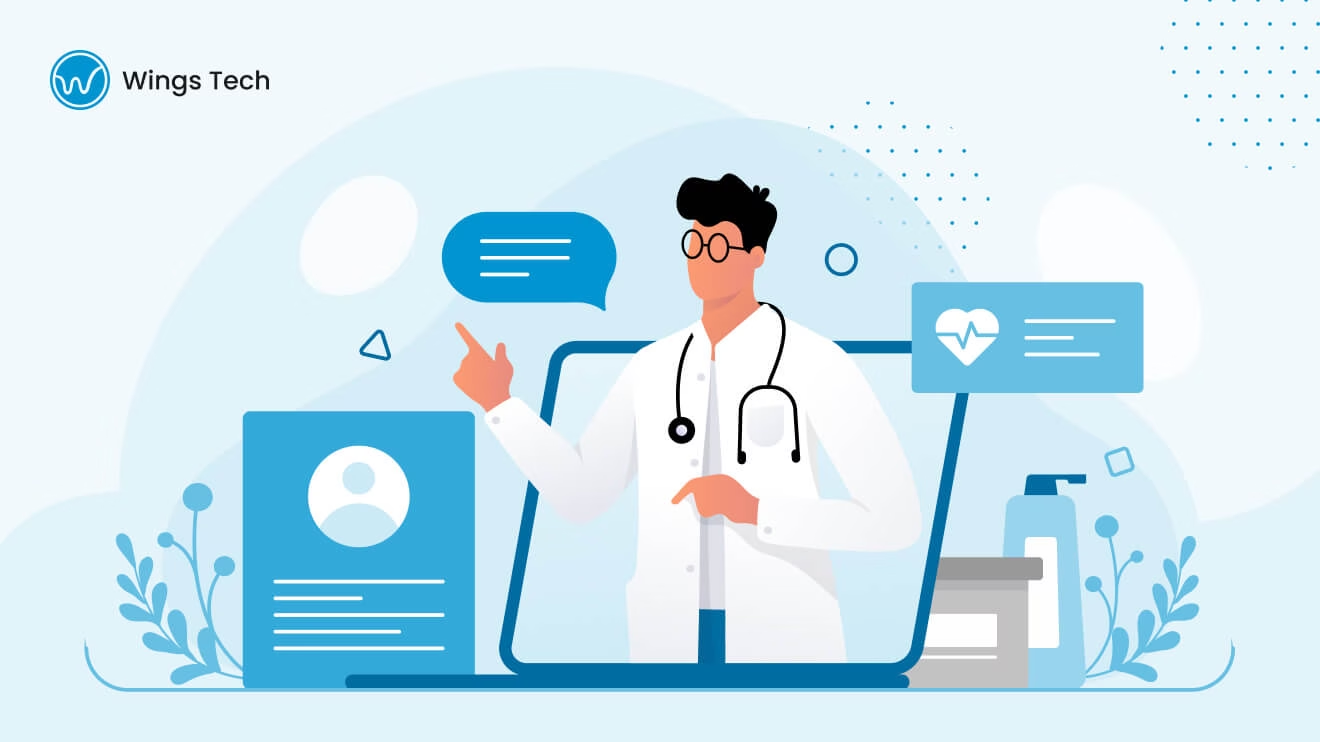
Table of Contents
What is Hospital Management Software Development?
Hospital management software development is the construction and implementation of a digital system that helps to manage the various levels of a hospital, clinic, diagnostic center, or multi-specialty healthcare network. This includes everything from the front desk at the time of patient registration, through how beds are assigned, to where laboratory results are delivered, how claims are processed, and how doctors communicate with their patients.
Hospital Management Software is not one application but rather an entire ecosystem. A complete and effective hospital software platform combines your Hospital Information System (HIS), Electronic Health Records (EHR & EMR), Laboratory Information System (LIS), Pharmacy Management, Billing and Insurance Claims, and Patient Engagement tools into a single Clinical and Operational Layer. When this entire ecosystem is operational, you can spend less time on paperwork with your clinical and administrative staff and much more time on providing patient care.
Why Does Your Healthcare Business Need Custom Software?
Epic, Cerner (Oracle Health), or MEDITECH have been effective solutions for many large hospitals; however, they have limitations that can cause challenges such as having to adapt the clinical workflow to the software and the poorly scalable licensing costs for mid-sized and specialty facilities. Custom software created for your hospital’s type, patient population, and delivery model will provide you with the tools that are needed to create a better environment for patients.
Operational efficiency at scale
Automation, either on beds, staff placement, scheduling, and requests for equipment maintenance, allows you to reduce your administrative burden by approximately 35-40%
Personalized patient care
Longitudinal patient history; labs, medications, etc., provide clinicians with appropriate alerts, reminders to care providers, and care-related risk flags at the time of providing care.
Seamless third-party integrations
HL7/ FHIR-based integration directly with your insurance payer(s), national health registries, diagnostic labs, and/or pharmacy networks without the need for duplicative data input or record mis-matching.
Data-driven resource optimization
By utilizing AI-powered predictive modeling, hospitals can forecast patient volume and optimize personnel scheduling, as well as track and manage their current inventories of critical supplies based on both seasonal demand and real-time demand signals.
How Hospital Management Software Gets Built
A well-run hospital software project will have a defined process, but it will also allow flexibility throughout its execution. Rushing any phase in this process creates clinical and compliance debt that will appear at the worst possible moment during a mass casualty event, in an audit, or even a system failure when patient census is at its highest.
1) Discovery & requirements scoping
By conducting a detailed analysis of the current state of your practice’s clinical workflow and how it’s utilized, as well as any obstacles to implementation, you’ll create a framework for what’s needed to build a new way forward. This process identifies need from the perspective of clinicians so that you can avoid building tools that will never be used.
2) Architecture & system design
Engineers craft data models, establish API contracts, and create an infrastructure plan in which model-level support, HIPAA/GDPR compliance, and auditing are built in from inception. Here is where the decision between using microservices or building a monolithic application will be made. Houses built upon these foundations could face high refactoring costs due to poor architectural decisions or could fail to be compliant.
3) UI/UX design for clinicians & patients
Two separate design tracks: a fast, low-friction interface for doctors, nurses, and administrative staff working under time pressure; and a clear, accessible, patient-facing experience across web, mobile, and kiosk for appointments, records, and billing.
4) Core development & API integration
Building the EHR, appointment scheduling, billing engine, and integrating insurance clearinghouses, lab systems, pharmacy networks, and telehealth modules. Third-party API reliability and data accuracy are tested rigorously, since errors here have clinical consequences.
5) QA, load testing & compliance checks
Stress-tested for peak admission periods and emergency surges. HIPAA compliance for patient data, PCI-DSS for payment processing, and accessibility standards are all verified before launch, along with clinical safety testing for any decision-support features.
6) Staff training & phased rollout
Soft launch with select departments, followed by full rollout with live clinical support on-site. Structured training reduces documentation and medication errors at go-live by more than 50% compared to cold switchovers.
7) Ongoing maintenance & feature updates
Hospital software is never “done.” Evolving insurance rules, new lab integrations, regulatory updates, and emerging clinical guidelines require continuous iteration.
Technologies Behind Modern Hospital Platforms
Choosing the right stack isn’t about trend-chasing. It’s about reliability, data integrity, interoperability, and the ability to scale from a single clinic to a multi-hospital network without a rebuild.
Front-end: React, Angular, React Native / Flutter
Clinician dashboards and admin panels are commonly built with React or Angular for their component reusability and strong ecosystem support. React Native or Flutter provides cross-platform options for patient-facing and clinical mobile apps.
Back-end: Node.js, Java, .NET, Python
Node.js handles real-time operations like bed status updates and notifications. Java and .NET are common in large enterprise hospital systems needing robust, auditable transaction processing. Python powers AI/ML components like readmission risk prediction and demand forecasting.
Databases: PostgreSQL, MongoDB, Redis
PostgreSQL is responsible for structured transactional data, which includes admissions, billing, and lab orders, and is usually characterized by strict rules on data referential integrity. In contrast, MongoDB supports flexible clinical documentation and free-format notes. Redis stores session data and provides fast access to reference data.
Integrations: HL7, FHIR, Stripe/Payment Gateways, Twilio
HL7 and FHIR standards ensure interoperability between EHR systems, labs, and national health information exchanges. Payment gateways handle billing and insurance co-pay processing. Twilio powers SMS and WhatsApp appointment reminders and follow-up communication.
Hospital Software Trends Reshaping 2026
AI & ML in clinical decision support
AI models analyze patient vitals, history, and lab trends to flag early warning signs and suggest evidence-based care pathways to clinicians before conditions escalate.
Remote patient monitoring
Connected wearables and home monitoring devices feed real-time vitals into the hospital system, allowing clinicians to track chronic disease patients and post-discharge recovery without requiring a hospital visit.
Telehealth & virtual consultations
Video consultation and e-prescription workflows have moved from a pandemic-era stopgap to a baseline expectation, especially for follow-up visits and specialist access in underserved areas.
AI-driven administrative automation
Traditionally, systems required manual data entry, but now AI technology can convert voice recordings into text, identify coding mistakes, and automatically fill out insurance forms, all of which lessen the number of administrative tasks that need to be done by a clinician.
Interoperable health data exchange
As healthcare reform and implementing FHIR continue, patients expect their records to be accessible anywhere at any time, and therefore hospitals, labs, and pharmacies are no longer expecting people to fill out the same forms multiple times.
Unified data platforms
Hospitals have the opportunity to combine many types of data into one system, which enables administration to have a real-time perspective of capacity, patient results, and how the facility is financially functioning, all from one unified dashboard.
Conclusion
While patient care is what the industry is centered around and will always be the focus of the different systems and processes that are in place to support that care, by 2026, those same systems and processes will be directly attributable to patient outcomes, clinician productivity and how patients view the quality of their healthcare experiences (before they arrive, during their visit, and after they have left).
At Wings Tech, we help healthcare organizations build these seamless digital experiences through custom web and mobile application development. Our scalable, secure, and user-friendly healthcare solutions empower hospitals, clinics, and healthcare providers to deliver efficient operations and exceptional patient care.