 June 1, 2026
  Admin
Admin 
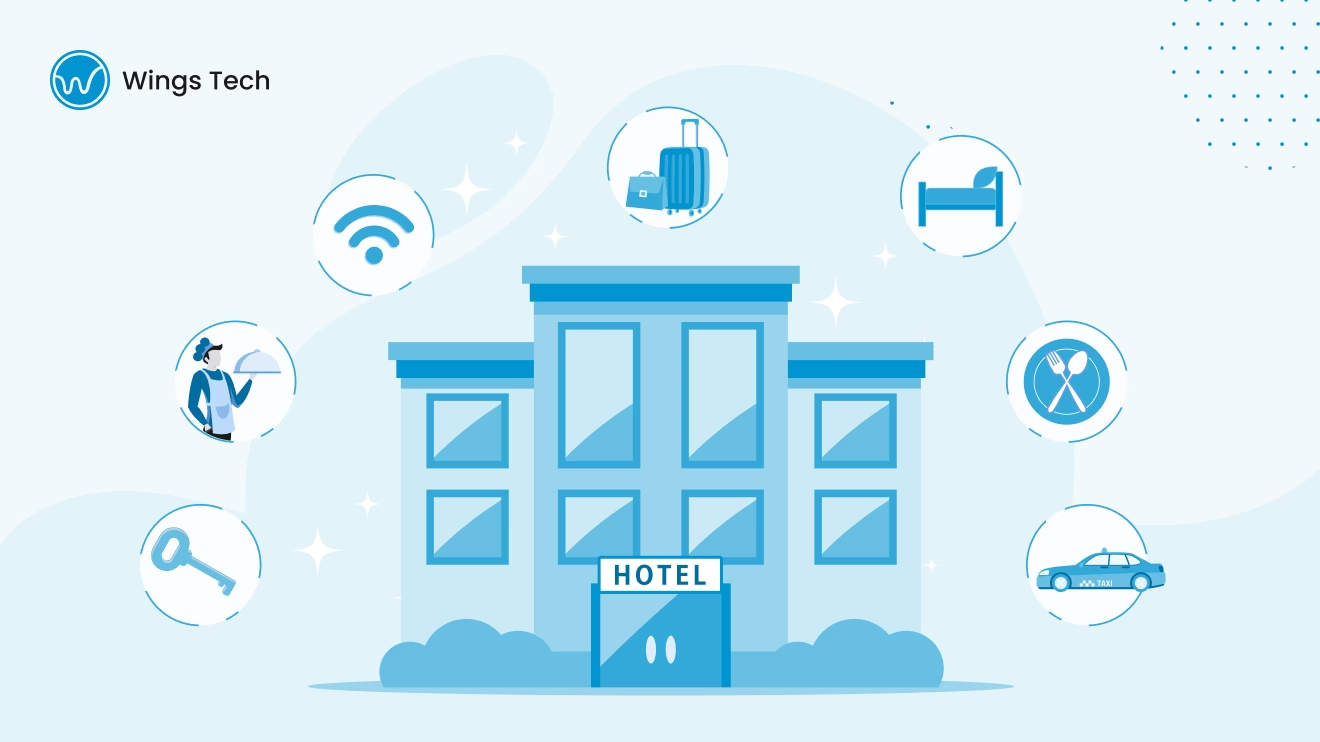
Table of Contents
Hospitality software development refers to the creation and construction of the digital systems that drive the various levels of a hotel, resort, restaurant, or event venue. From the front desk operations and the routing of kitchen orders to tracking and rewarding loyalty to your guests to managing revenue, hospitality software development encompasses it all.
Hospitality Software is not just one single application. Hospitality Software is an entire ecosystem. A well-designed, well-built hospitality software platform consists of your Property Management System (PMS), your Point of Sale (POS), Channel Manager, Central Reservation System (CRS), and Guest Experience tools that combine into a single, integrated operational layer. When this entire ecosystem is functioning, your Front Desk staff will have a lot less paperwork to complete so that they can serve your guests much more efficiently.
Why Does Your Hospitality Business Need Custom Software?
Solutions such as Opera or Cloudbeds have proven effective on many of them, but they have intrinsic limitations (e.g., you have to adjust your workflow around the software, rather than vice versa). Custom-developed software for the hotel/hospitality industry provides the tools you need based on your property type, guest profile, and operating model.
Operational efficiency at scale
Automating housekeeping assignments, maintenance requests, and shift reports can reduce manual overhead by up to 40%.
Personalized guest journeys
Utilize historical stay information and individual preferences to provide appropriate room upgrades or additional amenities when you’re ready for an upgrade.
Seamless third-party integrations
Connect to OTAs like Booking.com, Expedia, and Airbnb plus GDS networks without double-entry or inventory mismatches.
Dynamic revenue optimization
With AI-powered price engines, we’ll use real-time performance data to determine the optimal RevPAR based on current demand for each hotel by analyzing competitors and booking speed.
How Hospitality Software Gets Built
A hospitality software project that has good execution will have a structured but flexible project approach. Rushing through any stage in the process creates operational debt that will be felt at the most inopportune time: an entirely booked-out weekend.
1) Discovery & requirements scoping
By conducting a thorough audit of your business, your staff’s workflow, the pain points in your operation, and the guests’ comments about your operations, you will create a roadmap for the features you will build and the priorities for the integrations needed to build those features. This will help to prevent the issue of scope creep during your build.
2) Architecture & system design
Engineers design the data models, API contracts, and infrastructure plan. Microservices vs. monolith decisions are made here. Bad architecture decisions now mean six-figure refactors later.
3) UI/UX design for staff & guests
Two separate design tracks: an efficient, low-friction interface for front desk and back-office staff; and a polished, branded guest-facing experience across web, mobile, and kiosk.
4) Core development & API integration
Building the PMS, booking engine, POS, and integrating OTA channel managers, payment gateways, keyless entry systems, and loyalty programs. Third-party API reliability is tested rigorously.
5) QA, load testing & compliance checks
Stress-tested for peak season demand. PCI-DSS compliance for payment processing, GDPR compliance for guest data, and accessibility standards all verified before launch.
6) Staff training & phased rollout
Soft launch with select departments, followed by full rollout with live support. Staff training reduces error rates at go-live by more than 60% compared to cold switchovers.
7) Ongoing maintenance & feature updates
Hospitality software is never “done.” Seasonal pricing logic, new OTA partnerships, mobile OS updates, and emerging guest expectations require continuous iteration.
Technologies Behind Modern Hospitality Platforms
Choosing the right stack isn’t about trend-chasing. It’s about reliability, integration depth, and the ability to scale from a boutique inn to a multi-property chain without a rebuild.
Front-end: React, Vue.js, React Native
Staff dashboards and admin panels are powered by React. In addition to these tools, React Native offers a cross-platform option to develop mobile applications for both guests and housekeeping teams.
Back-end: Node.js, Python, .NET
Node.js handles real-time operations like room status updates and messaging. Python powers AI/ML components like demand forecasting. .NET suits large enterprise property groups needing robust transaction processing.
Databases: PostgreSQL, MongoDB, Redis
PostgreSQL handles structured transactional data like reservations and billing. MongoDB stores flexible guest profiles and activity logs. Redis caches availability data and session state to achieve sub-second response times.
Integrations: HTNG, OTA Connect, Stripe, Twilio
HTNG-compliant APIs ensure interoperability with industry-standard PMS vendors. Stripe and Adyen handle global payment processing. Twilio powers SMS and WhatsApp guest communications. Smart lock APIs (Salto, ASSA ABLOY) enable keyless entry.
Hospitality Software Trends Reshaping 2026
AI & ML
Artificial Intelligence models analyze and process hundreds of signals from each guest, such as booking method, room preference, dining habits, etc. These signals enable artificial intelligence to offer upsell options to guests before they even ask for them.
Smart room automation
Smart room automation allows thermostats, lights, blinds, and entertainment systems to learn a guest’s preferences over time. Occupancy sensors can save hotels 30-40% of energy costs while creating a comfortable atmosphere for their guests.
Mobile check-in & digital keys
There is no front desk with NFC or BLE-enabled phone keys, allowing guests to bypass the front desk. For those under 45 years old, 73% expect it to be available. It has moved from being a unique differentiator to a baseline expectation.
AI-driven dynamic pricing
Traditional systems operate using a single overnight batch update while ML pricing engines respond to real-time demand fluctuations, typical demand fluctuations, local events, and competition pricing changes in real-time (i.e., minutes).
Frictionless & flexible billing
Buy now, pay later for hotel stays, crypto payment acceptance, and consolidated group folios; guests expect the same payment flexibility they get in retail.
Unified data platforms
Breaking down silos between PMS, POS, and CRM data gives GMs a single dashboard view of RevPAR, guest satisfaction scores, and operational KPIs in real time.
Conclusion:
Guest relations are always at the heart of hospitality; however, by 2026, the processes and systems that support that guest interaction will have a significant impact on how potential guests will perceive your establishment before, during, and after their stay.
The experiences listed above will be characterized by the level of sophistication offered through their technology solutions. Technology is generally invisible when it operates correctly; however, its presence can be very apparent if it is not functioning properly.